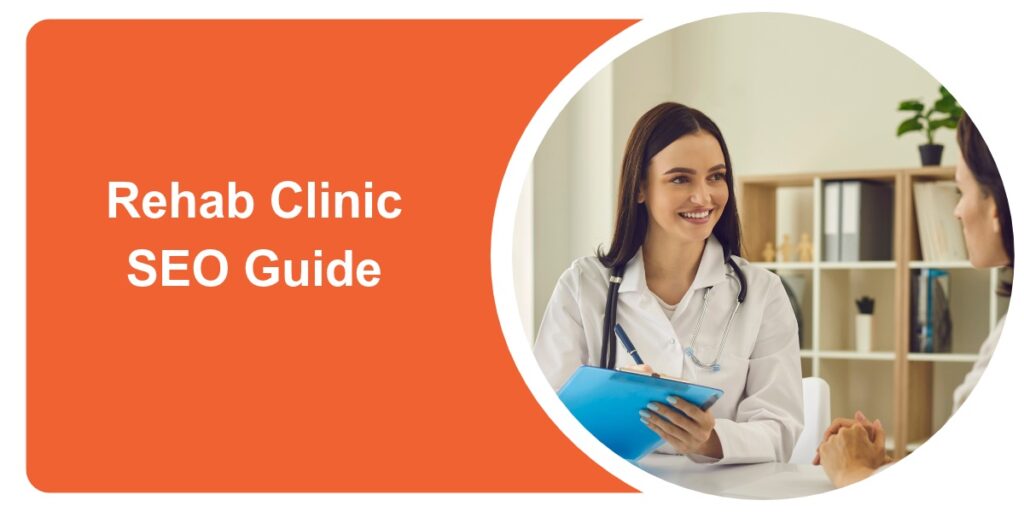
Searching for addiction treatment is one of the most intense, vulnerable moments a person or family will ever experience. When someone types “drug rehab near me” or “inpatient alcohol detox accepting insurance” into Google at 2:00 AM, they aren’t looking for a basic blog definition, they are seeking immediate help, safety, and operational clarity. Executing a modern Rehab Clinic SEO strategy goes far beyond simple keyword placement; it is about building digital infrastructure that demonstrates medical credibility, respects patient privacy, and connects families in crisis with life-saving care.
In the addiction treatment sector, where paid acquisition costs continue to rise and regulatory constraints like LegitScript restrict digital advertising options, organic search stands as your most reliable growth channel. This guide covers the exact framework necessary to rank your facility at the top of organic search results, satisfy strict YMYL (Your Money or Your Life) standards, and turn website visitors into verified bed admissions.
What Is SEO for Rehab Clinics?
SEO for Rehab Clinics is the strategic process of optimizing an addiction treatment center’s online footprint, including its website, local business profiles, clinical credentials, and external links, to rank prominently in search engine results for high-intent queries.
Unlike standard local businesses, rehab clinics operate under Google’s strictest YMYL guidelines and E-E-A-T (Experience, Expertise, Authoritativeness, and Trustworthiness) evaluation standards. This means search engines require explicit proof that your medical content is authored or reviewed by licensed professionals (e.g., MDs, CADCs, LMFTs), that your facility is legitimate, and that your digital experience safeguards user trust.
HOW A FAMILY IN CRISIS FINDS YOUR CLINIC
FAMILY / PATIENT IN CRISIS
Enters a high-intent search query
▼
REHAB CLINIC ORGANIC FOOTPRINT
Medical E-E-A-T & reviewed schema • Verified Google Business Profile • Transparent admissions & insurance information
▼
QUALIFIED ADMISSIONS CALL
Immediate help and bed occupancy growth
When a panicked loved one searches for “30-day inpatient rehab that accepts Aetna,” search algorithms prioritize facilities that provide immediate answers regarding levels of care, insurance coverage, licensing, and facility safety.
Why SEO Matters for Addiction Treatment Centers
Relying solely on paid advertising (PPC) presents major operational vulnerabilities for addiction treatment centers. Strict certification requirements, high cost-per-click rates, and ad account suspensions make organic search an essential foundation for long-term bed occupancy.
1. Dominating High-Intent Search Traffic
Paid search ads for addiction keywords can cost upwards of $50 to $150 per click. An authoritative organic presence delivers a continuous stream of qualified traffic without paying a direct fee for every visitor who lands on your site.
2. Establishing Unshakable Medical Trust
Families placing a loved one into residential treatment perform deep research. When your facility appears consistently across organic search rankings, local map packs, and authoritative health publications, it establishes institutional credibility that paid ads cannot match.
3. Capturing Local and Regional Demand
Most patients prefer treatment facilities within driving distance or within a specific regional radius. Local search optimization ensures your center appears prominently in Google’s Map Pack when users search for immediate local care.
How Rehab Clinics Actually Do SEO
Executing organic search growth for an addiction treatment center requires coordinating content, technical hygiene, and local search signals. The four core pillars of rehab clinic SEO are:
CORE PILLARS OF REHAB CLINIC SEO
PILLAR 1
Google Business Profile & Local Map Pack Optimization
PILLAR 2
Clinical E-E-A-T Infrastructure & Medical Review Schema
PILLAR 3
Strategic Intent-Based Keyword Research
PILLAR 4
Privacy-Compliant Local & Digital PR Link Building
Optimizing Google Business Profile (GBP)
Your Google Business Profile serves as the front door for local crisis searches. Clinics maintain precise primary categories (e.g., Addiction Treatment Center, Mental Health Center), update facility photos, list accepted insurance plans, and publish accurate contact information matching their physical licensing.
Medical E-E-A-T Infrastructure
Google scrutinizes healthcare websites intensely. Top-performing clinics publish clear author biographies for clinical personnel, display medical director credentials prominently, and implement ReviewedBy Schema markup across all educational and clinical service pages.
Strategic Keyword Mapping
Instead of targeting high-volume, low-intent terms that draw non-converting traffic, successful centers align keywords directly with distinct stages of the recovery decision pathway:
- Service-Based: Focuses on levels of care (e.g., PHP, IOP, Medical Detox).
- Condition-Based: Focuses on specific substance use disorders.
- Insurance & Financial: Focuses on coverage validation (e.g., Rehab that accepts Cigna).
- Local / Regional: Captures geographic searches across cities and states.
Privacy-Compliant Citation & Link Building
Acquiring external links in healthcare requires strict adherence to ethical standards. Clinics build authoritative backlinks by partnering with local health systems, contributing expert commentary to medical publications, and listing their facilities in verified healthcare registries.
High-Value Keyword Categories for Rehab Clinics
To build a robust content architecture, your keyword strategy should span across four main high-intent categories:
| Keyword Category | Target Keywords | Search Intent |
|---|---|---|
| Service-Based | • Inpatient alcohol rehab • Medical detox program • Intensive Outpatient Program (IOP) • Partial Hospitalization Program (PHP) | Commercial / Transactional |
| Problem / Condition | • Dual diagnosis PTSD and addiction • Prescription opioid dependency treatment • Severe alcohol withdrawal management | Informational / High Intent |
| Local / Geographic | • Rehab clinic near me • Best addiction treatment center in [City, State] • Top alcohol detox facility in [Region] | Transactional / Local |
| Commercial & Insurance | • Rehab accepting Blue Cross Blue Shield • How much does 30-day inpatient rehab cost • Private pay luxury rehab facilities | Transactional / Decision-Ready |
Step-by-Step SEO Strategy for Rehab Clinics
Follow this chronological execution plan to systematically build organic visibility for your facility:
6-STEP REHAB CLINIC SEO ROADMAP
STEP 1 →
Technical Audit
STEP 2 →
Keyword Mapping
STEP 3 →
On-Page & E-E-A-T
STEP 4 →
Local & GBP
STEP 5 →
Backlink Authority
STEP 6 ✓
Admissions Attribution
Step 1: Conduct a Technical & HIPAA-Compliance Audit
Ensure your site runs on an encrypted connection (HTTPS), loads within 2 seconds, and contains no broken redirects. Confirm that tracking scripts (like Google Tag Manager or analytics tools) do not collect or transmit Personally Identifiable Information (PII) or Protected Health Information (PHI) to maintain strict privacy compliance.
Step 2: Map Keywords to Site Architecture
Assign target keywords to specific pages based on search intent:
- Homepage: Core brand name + primary regional keyword (e.g., Premier Addiction Treatment Center in [State]).
- Level-of-Care Pages: Target dedicated service terms (e.g., /services/inpatient-rehab).
- Condition Pages: Focus on substance-specific terms (e.g., /conditions/alcohol-addiction).
- Insurance Pages: Target coverage terms (e.g., /insurance/aetna).
Step 3: Implement On-Page Medical E-E-A-T
For every clinical page, add a visible “Medically Reviewed By” line featuring the reviewing clinician’s name, degree, and credentials. Inject structured data (MedicalWebPage and Physician schema) into the header code so search engines explicitly recognize your clinical authority.
Step 4: Optimize Local Presence & GBP
Claim and verify your Google Business Profile for each licensed physical location. Ensure your Business Name, Address, and Phone Number (NAP) match across major health directories (such as WebMD, Healthgrades, and Psychology Today).
Step 5: Acquire High-Authority Healthcare Backlinks
Reach out to local hospital networks, university research centers, recovery non-profits, and regional health departments. Offer expert commentary, research citations, or educational guest resources to earn natural, high-authority editorial links.
Step 6: Monitor Admissions Attribution
Track performance metrics in Google Search Console and Google Analytics. Focus on primary conversion goals: click-to-call events from mobile devices, completed contact forms, and verified phone calls routed through your admissions desk.
Recommended SEO Tools for Rehab Clinics
- Google Search Console: Google Search Console is the definitive platform for monitoring how Google’s YMYL algorithms interpret your facility’s website. Rehab SEOs use it to audit indexation on newly created level-of-care pages, track impressions for high-intent crisis keywords, and verify that structured data testing tools recognize page-level MedicalWebPage and ReviewedBy medical author markup.
- Google Analytics 4 (GA4): In the rehab sector, analytics setups must be configured with extreme care to prevent transmitting Protected Health Information (PHI), such as URL paths containing specific substance terms or form submission payloads—to third parties. Setting up GA4 with explicit privacy-masking rules and custom conversion events allows clinics to track click-to-call admissions leads, insurance verification form completions, and intake interactions accurately while maintaining strict compliance.
- SEMrush / Ahrefs: Combining intelligence from SEMrush and Ahrefs is essential in a YMYL vertical to uncover commercial search intents (e.g., “private pay luxury detox in Florida”) while conducting deep E-E-A-T backlink audits. These tools allow rehab marketers to discover high-converting long-tail keywords, disavow toxic directory spam, and identify authority gap opportunities to earn trusted citations from state health departments, .edu medical research centers, SAMHSA directories, and accredited healthcare publications.
- PageSpeed Insights: Over 65% of crisis-driven rehab searches occur on mobile devices under severe emotional stress. If a website takes more than 2 seconds to load, desperate families will instantly hit the back button. PageSpeed Insights provides actionable performance diagnostics to optimize Core Web Vitals, ensuring hero sections, crisis hotline numbers, and click-to-call buttons render instantaneously.
- AnswerThePublic: Families searching on behalf of a loved one ask very specific, real-world logistical questions before making an admission decision. AnswerThePublic mines search engine autocomplete data to reveal the exact conversational queries caregivers type online (e.g., “How do I arrange an intervention for an adult child?” or “Does FMLA cover 30-day inpatient rehab?”). This data informs your FAQ sections and informational content pillars.
Common SEO Mistakes Made by Rehab Clinics
1. Publishing High-Volume “Symptom” Content
Focusing solely on general keywords like “signs of alcoholism” attracts massive traffic from high school students writing papers, but yields low conversion rates for actual bed admissions. Priority must be placed on intent-driven service terms.
2. Violating Patient Privacy for Reviews
Attempting to solicit public Google reviews from former patients without strict ethical protocols risks violating HIPAA regulations and alienating past clients. Instead, highlight institutional accreditations (e.g., Joint Commission, CARF) and anonymous alumni testimonials compliant with privacy standards.
3. Using Duplicate Content Across Location Pages
Opening satellite offices and copy-pasting the same text across multiple city pages results in algorithmic suppression. Each location page must feature unique local staff descriptions, facility photos, and community-specific resources.
4. Neglecting Technical Schema Markup
Failing to include structured schema markup prevents search engines from quickly parsing your facility’s address, accepted insurance plans, medical directors, and emergency contact methods.
5. Ignoring Mobile User Experience (UX)
Over 65% of crisis-driven rehab searches occur on mobile devices. If your website features intrusive pop-ups, slow-loading images, or hidden click-to-call buttons, desperate users will instantly bounce back to the search results.
Frequently Asked Questions
How long does it take to see results from Rehab Clinic SEO?
Initial technical fixes and local Google Business Profile improvements often yield map pack visibility within 60 to 90 days. Developing organic authority for competitive service keywords typically takes 6 to 12 months of consistent optimization.
Can we rank for keywords in neighboring cities without a physical facility?
You can create tailored regional service pages targeting adjacent communities, provided the content offers unique local value (e.g., regional transit guidance, local family support resources). However, your Google Business Profile will primarily rank within the immediate geographic vicinity of your licensed physical address.
Is LegitScript certification required for organic SEO?
LegitScript certification is mandatory for paid search advertising on platforms like Google Ads and Meta. While not an explicit requirement for organic SEO, displaying your LegitScript badge provides strong trust signals (E-E-A-T) to both search algorithms and visiting families.
Conclusion
Building a sustainable, high-performing organic channel for an addiction treatment center requires balancing technical precision, clinical authority, and compassionate user experience. By aligning your digital presence with real-world user intent and adhering strictly to Google’s E-E-A-T standards, your facility can reduce reliance on paid media while serving families during their time of greatest need.
Ready to scale your admissions pipeline with a tailored Rehab Clinic SEO strategy? Contact our healthcare growth team today for a complimentary technical E-E-A-T audit of your facility’s website.

I’m a certified digital marketing expert with over 9 years of experience helping businesses grow through SEO, PPC, and content marketing. I focus on creating data-driven strategies that deliver measurable results and long-term growth.