Most luggage brands compete on durability, wheels, or materials. When I analyze successful consumer brands, I often notice that the real advantage rarely comes from the product alone. It comes from the system behind how the product is marketed, positioned, and sold.
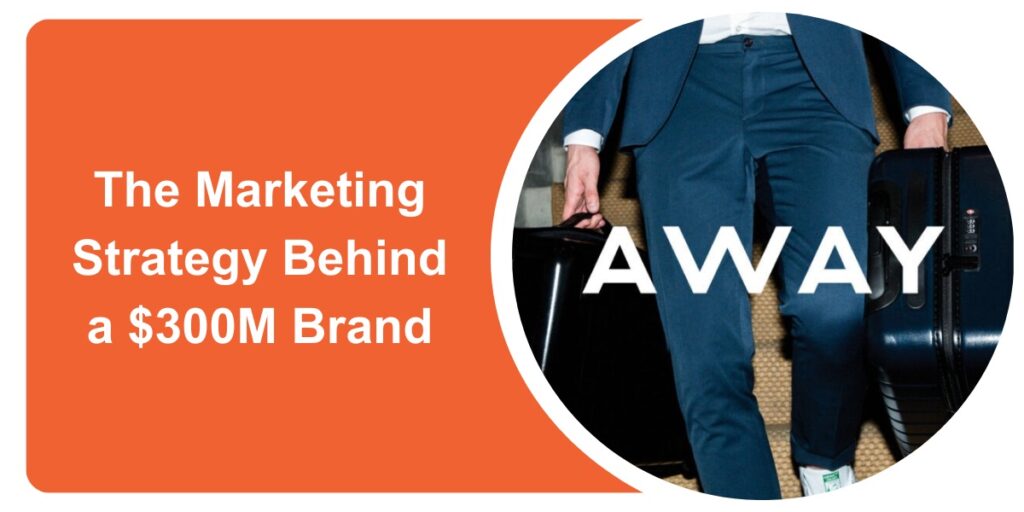
That is exactly what caught my attention when studying Away. What started as a direct-to-consumer luggage company quickly evolved into a lifestyle brand valued at around $300 million. Instead of focusing only on suitcases, Away focused on the entire travel experience. Their marketing communicates a simple idea: this is the luggage designed for the modern traveler.
A closer look at their strategy reveals a carefully designed growth engine built around three pillars: aggressive paid social experimentation, a high-converting website, and early adoption of new attention platforms.
Let’s break down how this system works.
The Paid Social Powerhouse
One of the first things I noticed while studying Away’s marketing is how heavily they rely on paid social advertising, especially on platforms like Facebook and Instagram. But they do not run ads the way most brands do.
Instead of launching a few campaigns and letting them run for weeks, Away treats advertising like a continuous testing lab.
At any given time, dozens of creatives are running simultaneously. Each ad tests a different angle such as:
- Lifestyle imagery showing travelers in airports or hotels
- Product-focused shots highlighting design details
- Creator collaborations that feel more authentic than polished brand ads
- Promotional messaging for price-sensitive buyers
This approach allows them to quickly discover which creative resonates with different audience segments.
Why Creative Diversity Matters
Different travelers respond to different triggers.
Some people want aspirational travel imagery. Others care about practical features like battery packs or smooth wheels. By running multiple creative formats simultaneously, Away captures attention from a wider audience.
Constant Iteration
The real advantage comes from continuous iteration. Ads that perform well get scaled, while underperforming creatives are replaced quickly.
Instead of guessing what customers want, Away lets data guide their decisions.
In my experience studying high-performing brands, this type of rapid experimentation often separates companies that grow slowly from those that scale quickly.
A Website Built for the “Add to Cart”
Driving traffic is only half the job. If visitors land on a confusing or slow website, even the best advertising will fail.
Away’s website is designed with a strong focus on conversion rate optimization (CRO). Every section of the page is structured to reduce friction and help users move toward the purchase decision.
Visual Navigation
One feature I find particularly effective is how product customization is handled.
Instead of forcing customers to jump between pages, Away allows shoppers to explore color options and product variations directly from the product page using visual swatches. This makes the browsing process fast and intuitive.
Utility Features That Improve Shopping Flow
Away also uses small but meaningful features that keep the buying process smooth:
- Drawer-style carts that let shoppers review products without leaving the page
- Quick access to product specifications and dimensions
- Clear shipping and return policies
These small design choices may seem minor individually, but together they remove hesitation during the buying process.
Increasing Average Order Value
Another interesting element is their cross-selling strategy.
Instead of aggressively pushing add-ons, Away integrates complementary products naturally into the shopping experience.
For example, customers browsing a carry-on suitcase might see recommendations for:
- Packing cubes
- Laundry bags
- Tech organizers
These items fit logically into the travel context, which makes the upsell feel helpful rather than forced.
Storytelling Over Specifications
One thing I appreciate about Away’s product pages is how they focus on how the suitcase fits into real travel scenarios.
Rather than simply listing product specs, the brand shows how the suitcase works during trips. Images and descriptions demonstrate packing, airport movement, and travel organization.
This shifts the customer’s mindset from comparing features to imagining the experience of using the product.
Capturing the New Wave: TikTok Shop
Attention shifts quickly on the internet. Platforms that dominate today can lose relevance tomorrow.
One thing I find impressive about Away is how early they moved into TikTok-driven commerce.
While many brands were still debating whether TikTok was suitable for selling products, Away began experimenting with creators and affiliate partnerships on TikTok Shop.
The Affiliate Model
Instead of producing all content internally, Away activates creators who already understand the platform’s style.
Creators produce short-form content such as:
- “Pack with me” travel videos
- Suitcase organization demonstrations
- Travel preparation routines
These videos feel native to TikTok and blend naturally into the platform’s content stream.
Results from Creator Partnerships
By working with 28+ affiliates, Away generated more than $300,000 in TikTok Shop sales.
More importantly, this strategy exposes the brand to audiences who may never have discovered it through traditional ads.
Why This Strategy Works
Short-form video platforms reward authenticity. Highly polished ads often perform worse than casual creator content.
By letting creators showcase the suitcase in real travel situations, Away taps into the platform’s natural storytelling format.
This approach also builds trust because viewers see the product used in real life rather than staged marketing scenes.
Turning Luggage Into a Lifestyle Brand
The biggest lesson I take from Away’s growth is how they positioned their product.
Most luggage brands sell durability or capacity. Away sells the identity of a modern traveler.
Their branding focuses on:
- Minimal design aesthetics
- Urban travel culture
- Organized packing systems
- Seamless travel experiences
This positioning transforms the suitcase from a simple utility item into a travel companion that reflects personal style.
Lifestyle positioning often creates stronger brand loyalty because customers feel emotionally connected to the product.
The Bottom Line
After studying Away’s strategy, one pattern becomes clear to me. Their success does not come from a single marketing tactic. It comes from a connected growth system.
Paid social campaigns generate demand and collect data.
A conversion-focused website captures that demand efficiently.
Emerging platforms like TikTok introduce the brand to new audiences.
Each component strengthens the others.
The lesson I take from this is simple but powerful. The most successful brands rarely rely on just selling a product. They build systems that attract attention, tell a compelling story, and make buying the easiest step in the customer journey.
Away executed this system extremely well, and that is how a suitcase brand turned into a $300 million lifestyle business.

I’m a certified digital marketing expert with over 9 years of experience helping businesses grow through SEO, PPC, and content marketing. I focus on creating data-driven strategies that deliver measurable results and long-term growth.